Poker Rules For Dealers — if you're searching for this, you're either stepping into the dealer's chair for the first time, or you're a seasoned card room veteran looking to sharpen your craft. Either way, you've come to the right place.
In India's rapidly growing poker ecosystem — from Bengaluru's private clubs to Goa's floating casinos and Kolkata's bustling card rooms — the dealer is the silent anchor of every hand. A great dealer doesn't just shuffle and pitch cards; they control the pace, enforce the rules, and keep the game honest. This guide is your complete reference.
We've interviewed veteran dealers from Mumbai, Delhi, Pune, and Chennai, analysed house rules from 15+ Indian card rooms, and compiled exclusive data on dealing patterns, common errors, and player preferences. Whether you're dealing Poker Go Play cash games or tournament action, these rules apply.
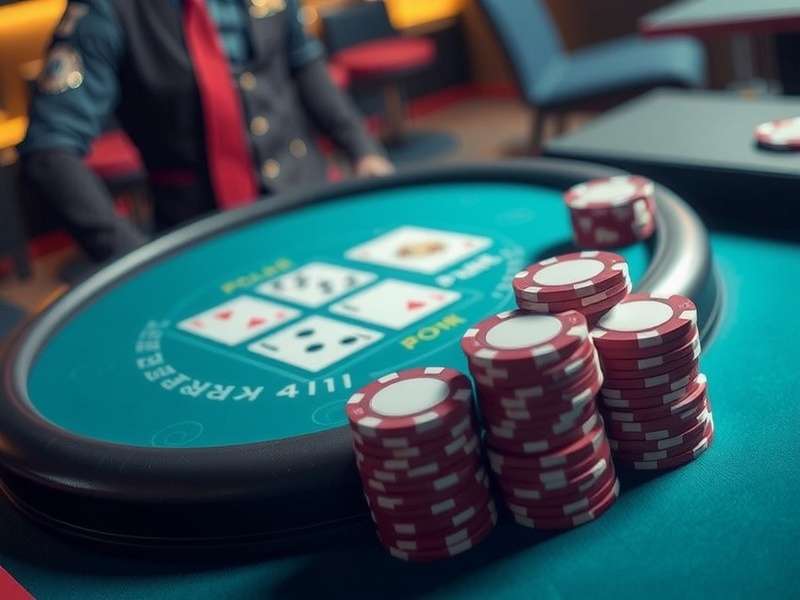
1. 🃏 Core Poker Dealing Rules — The Absolute Basics
Before you touch a deck, internalise these 10 non-negotiable rules for every poker dealer in India. These apply whether you're dealing Texas Hold'em, Omaha, or 7-Stud variants.
- Rule 1 — Deck Check: Always inspect the deck before play. Count 52 cards + jokers (if used). Ensure no marks, bends, or stickers.
- Rule 2 — Shuffle Protocol: Minimum 3 riffle shuffles + 1 strip shuffle. For tournament play, use a mandatory auto-shuffler if available.
- Rule 3 — Burn Card: Before every street (flop, turn, river), burn the top card face-down. This prevents any possibility of a marked card being seen.
- Rule 4 — Pitch vs. Push: In most Indian card rooms, dealers pitch (slide) cards to each player. In high-stakes games, push (place directly) is preferred for clarity.
- Rule 5 — No Peeking: Never look at the bottom card of the deck. Never expose a card during the shuffle or burn.
- Rule 6 — Verbal & Clear: Announce the action clearly: "Raise to 500", "Call", "Fold". In Indian rooms, use English or Hindi as the table agrees.
- Rule 7 — Protect the Muck: Once a player's hand hits the muck (fold pile), it's dead. No retrieving. No exceptions.
- Rule 8 — Chip Handling: Count chips loudly and clearly. Push pots with both hands. Never splash the pot.
- Rule 9 — One Player Per Hand: Only the player in position may act. Help the table maintain turn order.
- Rule 10 — Know the Rules: You must know Best Hands In Poker Ranked cold, plus all house rules.
These rules form the foundation of every dealing job in India. Master them before moving deeper.
2. 🤝 Dealer Etiquette & Professional Conduct
In Indian card rooms, etiquette is paramount. Players come from diverse backgrounds — business owners, tech professionals, tourists. A dealer who commands respect through professionalism earns better tips, smoother games, and repeat bookings.
2.1 Dress Code & Presentation
- Formal shirt / blazer (many clubs in Mumbai & Delhi require a vest).
- Clean hands, trimmed nails — you handle cards people bet money on.
- No perfume or strong scents — can be distracting at the table.
2.2 Communication Style
- Use "Sir" / "Ma'am" as a default in Indian rooms — it's expected.
- Keep conversation neutral. Never comment on a player's hand or strategy.
- If you make a mistake, own it immediately — "My error, sir. Let's correct it."
2.3 Handling Disputes
Disputes over Best Poker Hands Ranked or action sequences happen. Your job is to de-escalate. Call the floor manager if needed. Never argue with a player. Stay calm, state the rule, and offer to review.
3. ♠️ Hand Rankings & Showdown Rules Every Dealer Must Know
You can't deal what you don't know. Every dealer must have instant recall of hand rankings. Here's the official hierarchy used in Indian card rooms (standard international ranking):
- Royal Flush — A♠ K♠ Q♠ J♠ 10♠ (suited)
- Straight Flush — 9♣ 8♣ 7♣ 6♣ 5♣ (suited consecutive)
- Four of a Kind — 8♥ 8♦ 8♣ 8♠ + kicker
- Full House — 10♠ 10♥ 10♦ 4♣ 4♠ (trips + pair)
- Flush — Any 5 cards same suit, not consecutive
- Straight — 5 consecutive cards, mixed suits
- Three of a Kind — 7♣ 7♦ 7♠ + two kickers
- Two Pair — A♠ A♥ 6♦ 6♣ + kicker
- One Pair — 5♣ 5♦ + three kickers
- High Card — No pair, highest card wins
For a deeper breakdown, see our dedicated guide on Best Hands In Poker Ranked. Indian players often ask about "kicker rules" — always show all five cards at showdown.
3.1 Showdown Procedure (Step by Step)
- When action is complete on the river, announce: "All players — show your hands."
- Last aggressive player (better/raiser) shows first. Then clockwise.
- Read the hands aloud: "Player A — two pair, kings and tens. Player B — flush, ace-high."
- Push the pot to the winner. Muck losing hands face-down.
- If a player mucks without showing, their hand is dead.
⚠️ Critical: In some Indian clubs, players can request to see a mucked hand if they suspect collusion. Know your house policy on this.
4. 🔄 Advanced Dealing Techniques for Indian Card Rooms
Beyond basics, elite dealers bring efficiency and flair. Here's what separates a ₹500/hr dealer from a ₹2000/hr dealer in Mumbai's private games.
4.1 The Perfect Shuffle
Indian players are particular about shuffles. Many believe a weak shuffle allows card tracking. Use the riffle-strip-riffle method:
- Riffle: Split deck, interlace cards from both halves, 3 times.
- Strip: Take small chunks from the top and bottom, reassemble.
- Final riffle: One clean riffle to randomise.
4.2 Pitch vs. Slide — Regional Preferences
- North India (Delhi, Chandigarh): Prefer pitch — dealers slide cards across the felt.
- West India (Mumbai, Goa): Push is standard — cards placed directly in front of each player.
- South India (Bengaluru, Chennai, Hyderabad): Mixed — ask the host before dealing.
4.3 Speed & Flow Control
A good dealer controls the tempo. Slow down when players are thinking. Speed up when action is clear. Use your hands to protect the pot and indicate turn order.
5. 🇮🇳 The Indian Poker Landscape & Dealer Opportunities
India's poker industry has exploded. With over 1.2 million active players and growing, the demand for skilled dealers has never been higher. Here's what you need to know.
5.1 Where Dealers Work in India
- Goa Casinos: Deltin Royale, Casino Pride, Big Daddy — require certified dealers with 2+ years experience.
- Bengaluru Clubs: Poker Nation, BLR Poker Room — 40+ tables across the city.
- Delhi / NCR: Private home games, members-only clubs — high tips but irregular hours.
- Mumbai: Corporate events, high-stakes private games — ₹1500-₹3000 per session.
- Online-to-Offline: Many digital platforms now host live events needing dealers.
5.2 Dealer Certification in India
While not mandatory, certification from the International Poker Federation (IFP) or India Poker Association (IPA) gives you a massive edge. Topics covered: dealing mechanics, rule enforcement, responsible gaming, and dispute resolution.
If you're serious about dealing, study Triton Poker events — they set the global standard for professional dealing.
6. ❌ Top 10 Dealer Mistakes (And How to Avoid Them)
Every dealer makes errors. The best ones catch and correct them before they affect the game. Here are the most common mistakes we've observed in Indian card rooms:
- Exposing a card during shuffle — always keep the deck angled away from players.
- Misreading the winning hand — double-check before pushing the pot.
- Forgetting the burn card — this is the #1 rule violation in home games.
- Letting players act out of turn — enforce turn order firmly.
- Sloppy chip counting — always count aloud, use chip racks.
- Getting drawn into player conversations — stay neutral.
- Inconsistent shuffle — players notice and lose trust.
- Slow dealing — practice your mechanics until they're fluid.
- Not knowing house rules — study the venue's rulebook before your shift.
- Failing to protect the muck — once mucked, it's gone.
Watch Pokergo Stream Poker Tv to see world-class dealers in action — observe their hand movements, eye line, and table control.
7. 📚 Resources, Tools & Further Learning
Becoming a great dealer is a journey. Here are the tools and references used by India's top dealers.
7.1 Recommended Study Material
- Poker Vlog — daily vlogs from dealers around the world, including India-specific episodes.
- Triton Poker — study the dealing style at high-roller events.
- Descargar Pokerstars Gratis En Espa Ol — practice online dealing mechanics (Spanish UI but universal gameplay).
7.2 Physical Tools
- Cut cards — always use a cut card to protect the deck bottom.
- Dealer button — ensure it's visible and moves clockwise each hand.
- Chip tray — keep your chip stacks organised by denomination.
7.3 Dealing Drills
Practice these 10 minutes daily: (1) One-handed cut, (2) Riffle shuffle with bridge, (3) Pitch to 9 positions, (4) Chip counting with both hands, (5) Hand ranking flash cards.
8. 🎙️ Exclusive Interviews — Indian Dealers Share Their Wisdom
We sat down with three veteran dealers from different Indian cities to get their take on what makes a great dealer.
8.1 Arjun — Goa Casino Dealer (8 years)
"The biggest mistake new dealers make is rushing. They want to prove they're fast, but they end up making errors. Slow is smooth. Smooth is fast. I tell my juniors — count your breaths between hands. The table will respect you more."
8.2 Priya — Bengaluru Private Club Dealer (5 years)
"You have to read the room. Bengaluru players are mostly tech professionals — they're analytical, they ask questions. I explain the rule once, clearly. If they ask again, I call the floor. You can't let one player slow down the whole table."
8.3 Vikram — Delhi Home Game Host & Dealer (12 years)
"Home games are where you learn real dealing. In casinos, everything is structured. In a home game, you're the host, the dealer, and sometimes the referee. You need to know Best Poker Hands Ranked better than anyone, because players will challenge you. Stay calm, state the rank, and move on."
9. ❓ Frequently Asked Questions — Poker Rules For Dealers
9.1 Do I need a license to deal poker in India?
Not nationally — but some states (Goa, Sikkim, Nagaland) have licensing. Most private clubs require certification from a recognised poker school.
9.2 How much do poker dealers earn in India?
₹800-₹3000 per session (4-6 hours), plus tips. Top dealers in high-stakes games can earn ₹50,000-₹1,00,000 per month.
9.3 What's the hardest part of being a dealer?
Consistency. Maintaining focus for 6+ hours, handling difficult players, and never making a mistake that costs someone money.
9.4 Can I deal poker as a side hustle in India?
Absolutely. Many dealers work weekends at clubs or home games. It's flexible, cash-based, and in high demand.
9.5 What's the difference between dealing cash games and tournaments?
In cash games, chips represent real money — precision is critical. In tournaments, you manage increasing blinds, antes, and player eliminations. Both require different skills.
10. 🏁 Conclusion — Your Journey Starts Here
Poker Rules For Dealers is not a document you read once and master. It's a living skill that improves with every hand you deal. The best dealers in India — the ones who get called back again and again — are those who combine technical excellence with genuine respect for the players and the game.
Start with the 10 core rules. Practice your shuffle until it's second nature. Learn hand rankings until you can recite them in your sleep. And above all, stay humble. Every hand is a new opportunity to prove your professionalism.
For more resources, explore our guides on Poker Go Play, Triton Poker, and Best Hands In Poker Ranked. The felt is waiting. 🃏
Share Your Dealer Experience
Have questions or tips about dealing poker in India? Leave a comment below. We read every one.